

 trading
Understanding Extrinsic Value Dynamics: The Impact of Time Decay and Implied Volatility on Options Pricing

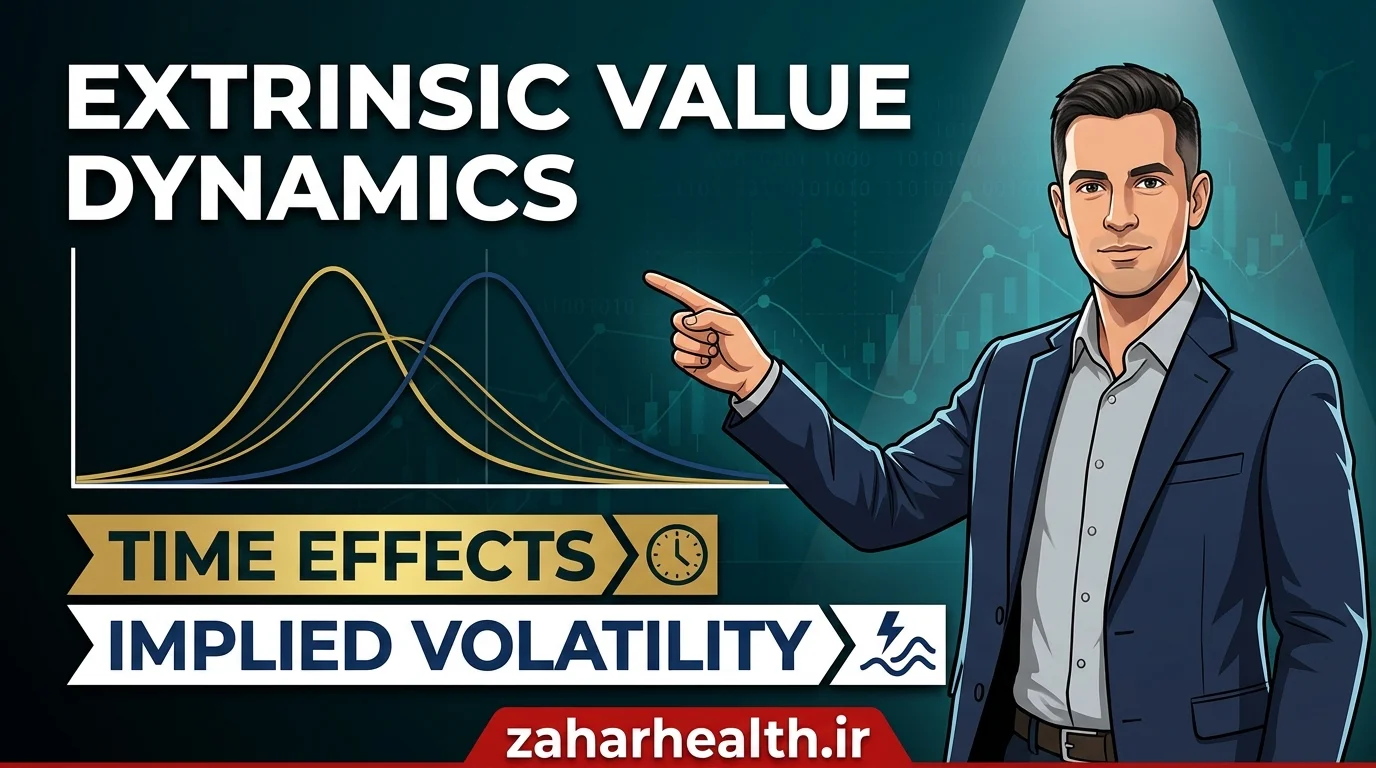
In option trading, mastering the distinction between intrinsic value and extrinsic value is fundamental to designing profitable trading strategies. While intrinsic value reflects the static financial advantage of an option based on its strike price relative to the underlying asset’s current price, extrinsic value represents the premium assigned to time and uncertainty.
Understanding how extrinsic value behaves under changing market conditions—specifically variations in Time to Expiration (DTE) and Implied Volatility (IV)—is crucial for managing risk, adjusting positions, and optimizing entry and exit points.
The Core Components of Option Pricing
An option’s total market price (premium) is composed of two primary elements:
$$\text{Option Premium} = \text{Intrinsic Value} + \text{Extrinsic Value}$$
- Intrinsic Value: The tangible, real-time value of an option if exercised immediately. It depends strictly on the difference between the strike price and the current price of the underlying asset. Intrinsic value is static with respect to time and volatility; it does not change unless the underlying price moves.
- Extrinsic Value (Time Value): The optionality value attributed to the likelihood that the option will move further into the money prior to expiration. Extrinsic value is dynamic, changing constantly due to time decay and shifts in volatility.
Mathematically and visually, extrinsic value forms a bell-shaped distribution across strike prices, peaking at the At-The-Money (ATM) strike and tapering off symmetrically toward In-The-Money (ITM) and Out-The-Money (OTM) strikes.

Advanced Options Trading in plain English | (Options Trading)
Course Specifications
- 18.5 Hours of HD Video Training: Full-length lessons in crisp 1080p resolution with English subtitles.
- Last Updated: February 2023
- File Size: 7.56 GB.
1. The Dynamic Impact of Time to Expiration (DTE)
Time to expiration is a dominant driver of extrinsic value. As time passes, the probability of the underlying asset making a significant favorable move diminishes, causing extrinsic value to erode—a phenomenon known as Theta Decay.
- Longer DTE (Back Months): Options with more time until expiration carry higher extrinsic value across all strikes. The bell curve of extrinsic value is wider and taller.
- Shorter DTE (Front Months): As expiration approaches, the extrinsic value curve compresses downward. At the exact moment of expiration, extrinsic value drops to zero, leaving only intrinsic value.
Implication for Rolling Positions
When rolling an option position to a further expiration month:
- ATM Options: Rolling an ATM position yields the maximum net credit (for short sellers) or requires the highest debit (for long holders), as extrinsic value peaks at the ATM strike.
- Deep ITM Options: Deep ITM options consist almost entirely of intrinsic value, with minimal extrinsic value. Consequently, rolling a deep ITM option to a future month generates a negligible net credit because you are swapping equal intrinsic values while gaining very little additional extrinsic premium.
2. Implied Volatility (IV) and Market Expectations
Implied Volatility reflects the market’s expectation of future price movement in the underlying asset over the life of the option. Unlike historical volatility, IV is forward-looking and fluctuates based on supply, demand, and upcoming market events.
- IV Expansion: When market uncertainty rises, traders “pump” implied volatility into option prices. This shifts the extrinsic value curve upward across all strikes, increasing the overall option premium without any movement in the underlying stock price.
- IV Crush: Following major events (such as corporate earnings announcements), uncertainty collapses, leading to a rapid reduction in extrinsic value.
Strategic Volatility Applications:
- Buying IV (Long Volatility): Implies a market position where you expect the actual realized price movement to exceed the move priced in by current implied volatility.
- Selling IV (Short Volatility): Implies a belief that the upcoming move will be smaller than expected, allowing the seller to capture the inflated extrinsic value as IV contracts.
3. Practical Takeaways for Option Traders
| Option Status | Primary Driver of Value | Extrinsic Value Level | Strategic Note for Rolling/Trading |
| At-The-Money (ATM) | Extrinsic Value | Maximum | Optimal structure for short volatility and time-decay strategies. |
| In-The-Money (ITM) | Intrinsic Value | Low to Moderate | High delta sensitivity; rolling yields small extrinsic credits. |
| Out-The-Money (OTM) | Extrinsic Value | Low to Moderate | Pure directional or volatility exposure with zero intrinsic value. |
Key Conclusions:
- Intrinsic Value is Static: It changes only when the underlying stock price moves relative to the strike price.
- Extrinsic Value is Dynamic: It continuously fluctuates due to the passage of time (Theta) and changes in implied volatility (Vega).
- Optimizing Strike Selection: To capture maximum premium decay or roll positions effectively, positioning close to the At-The-Money strike provides the highest concentration of extrinsic value.